
Every Japanese chef knife promises the same thing: a thinner, sharper edge than a Western knife, with none of the fuss of professional sharpening. Most home cooks buy their first set chasing exactly that.
But "Japanese Damascus steel knife set" is not one product — it's a marketing label stretched over very different builds. Some sets use a hardened steel core engineered for edge retention. Others use softer steel dressed up with a Damascus-style pattern that dulls within weeks. Hardness, edge angle, tang construction and price all vary more than the ads let on.
So we tested four of the most-searched sets side by side, ignored the marketing copy, and measured what actually held up: edge retention, balance, completeness and price-per-knife.
How We Compared the Leading Japanese Chef Knife Sets

Edge Retention Under Daily Use
A sharp knife out of the box is easy. We tested how each set held its edge across weeks of everyday prep — vegetables, fish, meat and bread — before any of them needed re-sharpening.

Steel Hardness and Construction
Not every set marketed as "Japanese-style" uses the same steel. We compared blade hardness (measured in HRC), full-tang construction and layered-steel claims across each set.

Edge Geometry and Cutting Precision
Blade angle affects how cleanly a knife slices. We compared the sharpening angle of each set and how that translated into control on delicate cuts versus everyday chopping.

Completeness of the Set
We checked whether each set covers the knives a home cook actually reaches for — paring, utility, santoku, bread and chef's knives — rather than padding the box with pieces most people never use.
Value Beyond the Purchase Price
Japanese-style knife sets range from under $100 to several hundred dollars. We looked at build quality, warranty, and how each set held up over time—not just the sticker price.
The real lesson: "Japanese Damascus steel knife set" is not a spec, it's packaging. Two sets can wear the same hammered pattern and still differ by 10+ points of HRC hardness and 4 fewer knives in the box.
Forged Blade's Hanzo and Tegami's PRO collection are the closest direct set competitors. Seido takes a different approach, selling a single premium knife rather than a full set. Okura keeps the focus on a hardened steel core, full-tang build and a complete 7-piece lineup at a much lower entry price.
One set gave us the best mix of steel quality, everyday performance and price.
Reveal Our #1 Knife SetOkura Precision Collection (7-Piece Knife Set)
Okura won because no other set we tested matched its hardness, edge angle and completeness at anywhere close to its price.
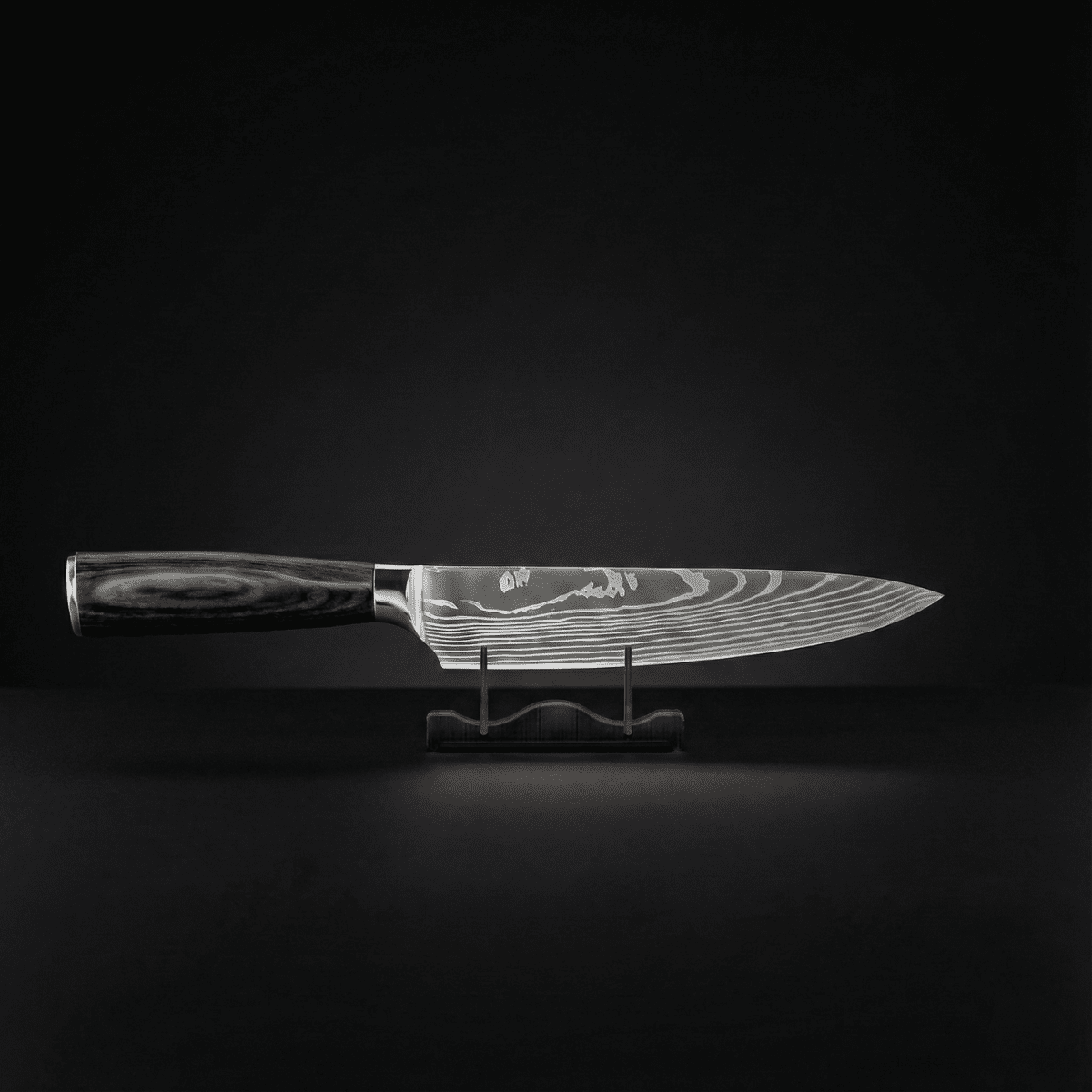
A hardened HRC 60–62 steel core and a 12–15° edge held up cleanly across weeks of everyday prep — vegetables, fish, meat, bread — without needing a re-sharpen. It felt balanced in hand, and at $299.95 during the current restock sale (down from $1,000), it cost less than sets with two or four fewer knives in the box. It didn't win every single category. It was simply the best all-rounder.

Ships free — 25-year warranty included.
What We Loved:
Things to Consider:
Okura didn't win on price alone. It combined the three things buyers actually care about — hardness, edge geometry and full-tang durability — with a price and a warranty that made saying yes easy.
Why Okura Ranked First
The Steel Held Its Edge in Real Use
Vegetables, fish and bread quickly expose a soft blade. Across our testing window, Okura's hardened core kept a working edge with only occasional honing needed — no daily resharpening.
The Edge Angle Made a Noticeable Difference
At 12–15° per side, the set's edge angle is meaningfully narrower than the 17–25° typical of Western-style knives. That translated into cleaner, more controlled slicing during testing.
Full Tang Construction Was Not an Afterthought
Not every set marketed as Japanese-style uses full tang construction throughout. Okura's build carried balance from heel to tip across all seven pieces, not just the chef's knife.
It Earned a Spot in the Daily Rotation, Not the Display Case
The set moved between paring, prep and larger cutting tasks without feeling specialized. A knife set only offers real value if you actually reach for it every day.
The Price Made a Complete Set Easier to Justify
Comparable Japanese-style sets from other brands often cost more for fewer pieces. Forged Blade's 5-piece Hanzo set runs $379.99 on sale — more than Okura's price for two fewer knives. Tegami's PRO collection is only 3 pieces at $197. At $299.95 during the current restock sale (down from $1,000 list) for a complete 7-piece lineup, Okura came in well ahead on both price-per-piece and completeness. The gap was large enough to affect the ranking, especially because the set still performed well and carried a long warranty.
The Advantages That Mattered Most
"A knife set only matters if the steel holds up and the balance feels right in the hand. Okura paired the edge retention people expect from a hardened core with the geometry and completeness needed for everyday use."
The Cookware Society Editorial Team | Testing note
Forged Blade Hanzo (5-Piece San Mai Set)
The Hanzo set is a solid direct alternative for buyers who want a full San Mai construction lineup. AUS-10 steel at 62+ HRC is comparable to Okura's core hardness, and the rosewood handles look great in photos. The issues are completeness and price: five pieces for $379.99 on sale works out to a higher per-knife cost than Okura's seven-piece set at $299.95, and the lifetime warranty excludes rust, moisture damage and any dishwasher use — conditions that are easy to violate by accident.

Things we liked:
Where it falls short:
Tegami PRO (3-Piece Damascus Set)
Tegami's PRO collection uses the same 67-layer Damascus cladding language as several other sets on the market, wrapped around a VG-10 core, but the brand doesn't publish a hardness rating — making it hard to verify how it actually compares on edge retention. At $197 for just three knives (chef's, utility, santoku), it covers far less of a kitchen's daily needs than Okura's seven-piece lineup, and with only 7 reviews on the product page, there's limited independent proof it holds up over time.

Things we liked:
Where it falls short:
Seido Kiritsuke Damascus Chef Knife
Seido's Kiritsuke is a well-known single-knife pick, and on paper the specs are close to Okura's: a VG10 core at 60–62 HRC wrapped in 67 layers of Damascus steel, with a full-tang build and a more acute 8° edge angle. It's a fine knife on its own, backed by 176 reviews, but it's just one blade for $119 — there's no paring, utility, bread or santoku knife included, so a buyer would need to purchase several more knives separately to match what comes in Okura's single 7-piece set.

Things we liked:
Where it falls short:
Japanese Knife Sets Compared Side by Side
The differences became much clearer once we looked beyond the label “Japanese-style” and compared steel hardness, edge geometry, construction and price:
| Feature | Editor's Pick 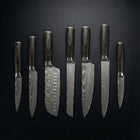 Okura Precision Collection |
Forged Blade Hanzo 5-Piece |
Tegami PRO 3-Piece |
Seido Kiritsuke (Single Knife) |
|---|
Expert Commentary
Why steel quality and edge angle matter more than marketing claims.
"This knife changed how I cook. The balance is unreal — it feels like an extension of my hand. I've owned other premium Japanese-style knives, and this holds up well against them."
Verified Buyer · Chef's Knife
"Bought the set as a gift. He hasn't stopped talking about them. The Damascus-style pattern is genuinely beautiful."
Verified Buyer · 7-Piece Set
"I've been a sushi chef for 12 years. The santoku from this set holds its edge better than knives I've paid three times more for. Incredible value."
Verified Buyer · Santoku
Our Final Take: The Best Japanese Chef Knife Set for Most Home Cooks
A hardened, narrow-edge Japanese blade makes a real difference for anyone who cooks often: cleaner slicing, less resistance, and an edge that actually holds up between sharpenings — provided you're willing to hand wash and skip the dishwasher.
Each brand had a clear strength. Seido's Kiritsuke offered a well-reviewed single knife for buyers who only want one blade. Forged Blade's Hanzo and Tegami's PRO collection were strong direct set alternatives. Okura, however, made the strongest overall case.
It held its edge well, covered every knife a home cook actually needs, and came with an advertised 25-year warranty — all for $299.95 during the current restock sale. For most shoppers specifically comparing Japanese Damascus steel knife sets, that was the strongest overall package.
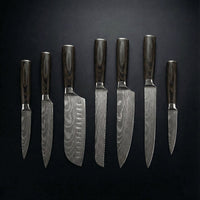
Okura Precision Collection (7-Piece)
2,847 Happy Home Cooks
Our top pick for shoppers who want a hardened steel core, a narrow precision edge, a complete 7-piece lineup and a lower price than the other leading sets we compared.
Forged Blade's Hanzo and Tegami's PRO collection remain good direct-set alternatives, while Seido's Kiritsuke is a solid single-knife choice for buyers who only need one blade. Okura suits the widest range of shoppers because it asks for the fewest compromises.
Backed by a 25-YEAR Warranty
For most first-time Japanese chef knife buyers, start with the Okura.
A hardened core and narrow edge are the reasons to consider a Japanese Damascus steel knife set in the first place — and Okura delivers both without the price premium or the incomplete lineup we found elsewhere.
View Today's Restock SaleJapanese Chef Knife Set Questions to Answer Before You Buy
Japanese-style knives typically use a harder steel core and a narrower edge angle (around 12–15° versus 17–25° on Western knives), which allows for thinner, more precise cuts at the cost of slightly more careful handling.
Forged Blade's Hanzo and Tegami's PRO collection are both direct set competitors, but with fewer pieces (5 and 3, respectively) at a higher price per knife than Okura's 7-piece lineup. Seido sells a single premium knife rather than a full set. The biggest practical differences come down to completeness, price and warranty terms.
Not necessarily. With proper use and regular honing, a hardened blade maintains its sharpness over time. Occasional professional sharpening restores peak performance when needed. Hand washing and proper drying are recommended.
These knives are designed for precision slicing of vegetables, meats, and fish. They are not intended for cutting through bones or frozen foods. For those tasks, a cleaver or heavy-duty blade is recommended.
It's easiest to justify when you cook frequently, want cleaner slicing than a standard Western knife provides, and value long-term edge retention. At $299.95 during the current restock sale, Okura was the easiest entry point among the primary sets compared.
It is best suited to cooks who specifically want a hardened, narrow-edge knife set and are comfortable hand washing and occasionally honing their knives. Someone wanting a complete set with the fewest compromises across price, hardness and completeness will find this the easiest entry point.